How to Run a Raffle in Australia: A Step-by-Step Guide | Rafflestag AU
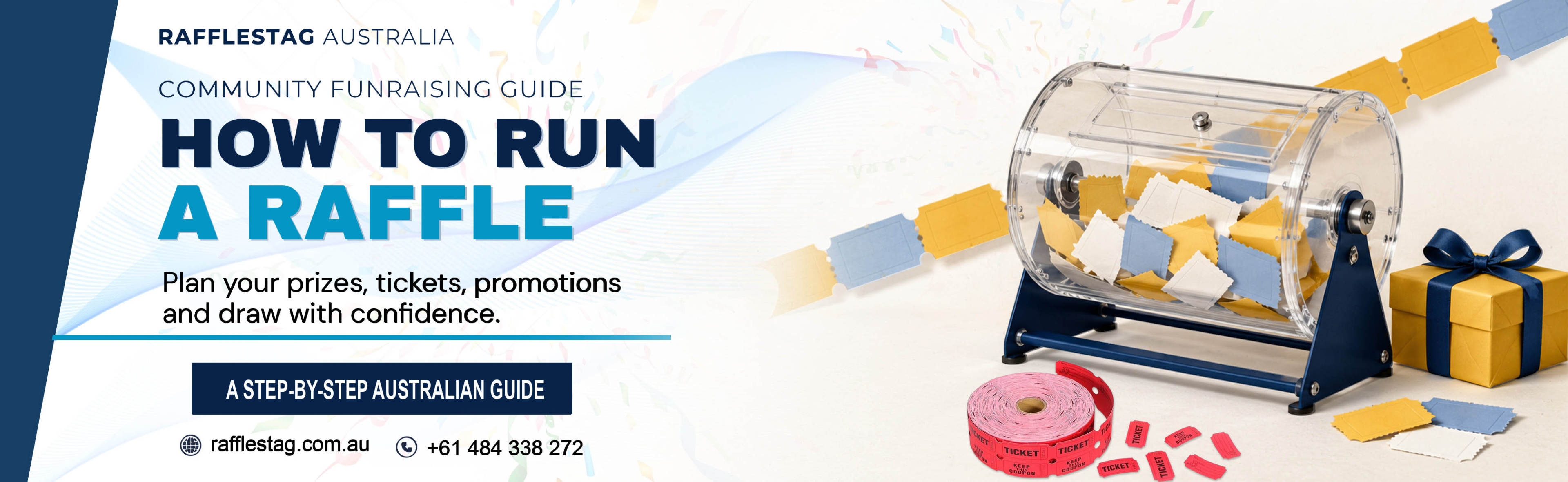
Raffles are one of the most loved ways to raise money in Australia. Think of the meat tray at the local pub, the hamper at the school fete, or the big car raffle run by a surf lifesaving club. They are simple, fun and familiar. People are happy to buy a ticket because they know the money goes to a good cause.
But under Australian law, a raffle is also a form of gambling. That means every state and territory has rules about who can run one, what prizes are allowed, and when you need a permit. The rules differ across the country. A raffle that is fine in New South Wales may need a permit in South Australia.
This guide walks you through running a raffle in Australia, from checking eligibility to handing over the prizes. It covers the key rules in each state, what to print on your tickets, how to hold a fair draw and what records to keep. Follow the steps and your fundraiser can run smoothly and legally.
Please note: This guide is general information, not legal advice. Raffle laws change, and thresholds are updated, often each financial year. We checked the figures below against official state sources in September 2026. Always confirm the current rules with your state or territory regulator before you sell any tickets.
Quick Overview: The Raffle Process
Running a raffle comes down to a clear set of steps. Most organizers work through them in this order, and each one is explained in detail below. The table gives you a quick view of the whole process, so you can see what needs to happen before, during, and after your raffle and plan your timeline properly.
|
Step |
What You Do |
|
1. Check eligibility |
Make sure your group is allowed to run a raffle |
|
2. Set a goal and budget |
Decide how much to raise and what you can spend |
|
3. Choose prizes |
Pick allowed prizes and record their retail value |
|
4. Check permit rules |
See if your state requires a permit or license |
|
5. Write the rules |
Set the draw date, place, and winner process |
|
6. Print tickets |
Include the details your state requires |
|
7. Promote and sell |
Advertise fairly and track every ticket |
|
8. Hold the draw |
Draw winners randomly and transparently |
|
9. Award prizes |
Contact winners and hand over prizes |
|
10. Keep records |
Store sales, costs and winner details |
Step 1: Check That Your Organization Can Run a Raffle
In Australia, raffles are generally reserved for fundraising by charities and not-for-profit groups. This includes schools, P&Cs and P&Fs, sporting clubs, service clubs like Rotary and Lions, churches, community associations and registered charities. The money raised must go to the organization or cause, not to a private person or business owner.
A business cannot usually sell raffle tickets to make a profit for itself. If a business wants to run a prize draw to promote its products, that is called a trade promotion lottery. Trade promotions are free to enter or linked to a purchase, and they follow a separate set of rules. This guide focuses on fundraising raffles only.
Some states add extra steps. In Victoria, for example, your organization must first be declared a community or charitable organization by the Victorian Gambling and Casino Control Commission (VGCCC) before it can run any raffle. In Queensland, who can run a raffle depends on the raffle's size. Check this step first, because everything else depends on it.

Step 2: Set Your Fundraising Goal and Budget
Before you pick prizes or print tickets, decide how much you want to raise and what you'll use it for. A clear goal, such as "$3,000 for new netball uniforms" or "$10,000 towards a school shade sail", makes your raffle easier to promote. People are more likely to buy tickets when they know exactly what their money will help achieve.
Next, work out your costs. Common costs include prizes you need to buy, ticket printing, advertising, banners, and any permit fees. Some states also set rules on how much of the money must go to the cause. In NSW, for example, at least 40% of the gross proceeds of a draw raffle must be paid to the benefiting charity or not-for-profit.
Then do some simple maths. Estimate how many tickets you can realistically sell and at what price. If you plan to sell 1,000 tickets at $5 each, your gross takings are $5,000. Subtract your costs to see your likely profit. If the numbers do not reach your goal, adjust the ticket price, the number of tickets, or your prize budget.
Step 3: Choose Your Prizes
Great prizes sell tickets. Popular raffle prizes in Australia include hampers, meat trays, vouchers from local businesses, electronics, weekend getaways, sporting memorabilia and, for larger raffles, cars or holidays. Many clubs and schools ask local businesses to donate prizes in return for a mention on posters, social media and the ticket itself.
Record the retail value of every prize. In most states, the total prize value decides whether you need a permit. Use the normal shop price, not what you paid or the donor's cost price. Keep a copy of receipts, quotes or catalog prices, so you can show how you worked out the value if the regulator asks.
Some prizes are not allowed. In NSW, prohibited prizes include firearms and weapons, tobacco and vaping products, cosmetic surgery, and more than a set amount of alcohol. Other states have their own limits, and some restrict cash prizes, so gift cards and vouchers are often a safer choice. Check your state's list before you promise a prize, especially if it involves alcohol, cash or anything age-restricted.
Step 4: Check Whether You Need a Permit
This is the step that trips up most organizers, because every state is different. Some states look at the total value of prizes. Queensland looks at total ticket sales instead. Below a certain level, you usually do not need a permit, but you must still follow the standard raffle rules. Above that level, you need approval before you advertise or sell a single ticket.
The table below summarises the key thresholds for the states we checked, based on official government sources. For other states and territories, contact the listed regulator, as rules and permit triggers vary. If your raffle is close to a threshold, apply for a permit anyway or confirm with the regulator first.
|
State or Territory |
Regulator |
When a Permit or License Is Needed |
|
New South Wales |
NSW Fair Trading |
Draw raffles are limited to $30,000 in total prizes without an authority; larger raffles fall under art union rules |
|
Victoria |
VGCCC |
Organization must be declared; permit needed when total prizes exceed about $23,060 (indexed yearly) or conditions cannot be met |
|
Queensland |
Office of Liquor and Gaming Regulation |
License needed when total ticket sales exceed $50,000 |
|
South Australia |
Consumer and Business Services |
License needed when total prizes exceed $5,000 |
|
Western Australia |
Department of Local Government, Sport and Cultural Industries |
Check with the regulator |
|
Tasmania |
Liquor and Gaming Branch, Department of Treasury and Finance |
Check with the regulator |
|
ACT |
Access Canberra and the ACT Gambling and Racing Commission |
Check with the regulator |
|
Northern Territory |
Licensing NT |
Check with the regulator |
If you need a permit, allow plenty of time. Applications can take several weeks, and some states ask you to lodge at least a few weeks before the raffle starts. Once approved, you will usually need to print the permit or license number on every ticket and on all your advertising, so wait for approval before you send anything to print.
Selling tickets online or across state borders adds another layer. If you sell to people in other states, those states' rules may also apply to your raffle. Many organizers keep things simple by selling only within their own state, or by checking each state's requirements before launching online sales.
Step 5: Write Your Raffle Rules
Every raffle should have clear written rules, even a small one. The rules tell buyers exactly what they are entering and protect your organization if there is a dispute. In NSW, you must clearly advertise the rules, or say where people can find them, such as on your website or social media page, if they will not fit on the ticket.
Your rules should include the name of the organization running the raffle and the cause it supports, the ticket price, the prizes and their value, and the date, time and place of the draw. They should also explain how winners will be chosen and contacted, how and where prizes can be collected, and what happens if a prize is not claimed.
Also decide who cannot enter. In NSW, people running the draw and people involved in managing the benefiting organization cannot play. You may also want an age limit, especially if a prize includes alcohol. Keep the rules short and plain so buyers and ticket sellers can understand them without asking questions.
Step 6: Print Your Raffle Tickets
Raffle tickets are more than a receipt. In most states, they must carry certain details. In NSW, tickets should include the ticket price, the name of the person or organization running the raffle, the name of the benefiting organization (if applicable), and the authority number if required. Other states have similar lists, so check yours.
Each ticket should have a unique number, with a matching butt or stub that your organization keeps. Write the buyer's name and phone number on the butt, so you can contact the winner. Sequential numbering also helps you track how many tickets each seller took, sold and returned, which is an important part of keeping honest records.
For small, on-the-day draws such as a meat tray raffle at a club or a lucky door prize at a school event, pre-numbered double tickets on a roll are quick and easy to use. Rafflestag Australia supplies custom raffle tickets for fundraisers. For larger raffles, check that your ticket layout includes every detail your state requires before you order.
Step 7: Promote Your Raffle and Sell Tickets
Promotion makes a big difference to sales. Share your raffle on Facebook, Instagram and community groups, in the school newsletter, and on noticeboards at local shops. Put the prizes front and center with good photos. A printed banner at your stall or club entrance helps people notice the raffle and remember to buy a ticket.
Advertising must be fair and honest. In NSW, raffle advertising must not show children taking part, suggest that buyers will definitely win, or claim that entering will improve someone's finances. If your raffle needs a permit, include the permit or license number on all advertising. These rules help protect buyers and keep trust in community fundraising.
Track every ticket book you hand out. Record which volunteer took which ticket numbers, and set a clear deadline for them to return money, sold butts, and unsold tickets. In NSW, sellers must return all butts, unsold tickets, and money before the draw. Volunteers who wear branded lanyards are also easier for the public to trust and find.
Step 8: Handle the Money Properly
Keep raffle money separate from anyone's personal funds. Bank the takings into an account in your organization's name as soon as possible. In NSW, you must deposit proceeds into an account with an authorized deposit-taking institution, such as a bank or credit union, no later than two business days after you receive the money.
Keep a simple spreadsheet or ledger that shows money in and money out. List ticket sales by seller, and record every cost with a receipt, such as prize purchases, printing, and advertising. Two people should count cash together, and both sign off on the total. This protects your volunteers from mistakes and from any suggestion that money went missing.
Larger raffles may also need an audit. In NSW, if the annual gross proceeds of a gaming activity exceed $250,000, a qualified auditor must audit the accounts. Permit holders in other states may need to lodge a financial return after the raffle. Check your permit conditions so you know what reports are due and when.
Step 9: Hold a Fair Draw
The draw must be random, fair, and appear fair. Hold it on the date, time and place stated in your rules. Place all the ticket butts, including those from tickets sold online, into a barrel, box or bag and mix them well. Ask an independent person, such as a guest or local community member, to draw the tickets without looking.
Draw prizes in the correct order. In Victoria, the first ticket drawn must win first prize, and reverse draws, where the last ticket drawn wins the top prize, are not allowed. Each ticket should have an equal chance of being drawn. If you use a random number generator for an online raffle, make sure it is reliable and that you can show how it works.
Make the draw public where possible. Invite ticket holders to watch in person, or stream it live on your Facebook page. Record the winning ticket numbers, the prize each one won and the name of the person who drew them. A transparent draw builds trust and makes supporters more likely to buy tickets in your next raffle.

Step 10: Contact Winners and Award Prizes
Contact winners as soon as possible after the draw using the details on the ticket butt. Many organizers also publish the winning ticket numbers on their website or social media, and in the local paper for larger raffles. Arrange a convenient time for winners to collect prizes, or organize delivery for larger items.
Sometimes you can't reach a winner. Your rules should explain how long you will hold an unclaimed prize and what happens next. In NSW, for raffles that need an authority, if the rules don't set a time frame, you must keep the prize for at least three months before drawing a new winner. Perishable prizes, like a meat tray, can be handled differently.
With their permission, take a photo of each winner with their prize and share it with your supporters. It shows the raffle was real and fair, publicly thanks your sponsors, and builds excitement for your next fundraiser. Let everyone know how much you raised and how you'll use the money.
Step 11: Keep Records and Report
Good records are required by law and make future raffles easier. Keep details of all expenses, the dates the raffle ran, the draw date, the prizes and their total value, gross proceeds, the amount paid to the cause and, where practical, the names and contact details of winners. Store ticket butts and receipts in a safe place.
If your raffle needed a permit, you may have to submit a financial statement or return to the regulator by a set date after the draw. Missing this deadline can affect future applications. Assign one committee member to report, and add the due date to your calendar as soon as your permit is approved.
After the raffle, hold a short review with your committee. What sold well? Which prizes drew the most interest? Where did most ticket sales come from? Write down what worked and what did not, and store it with your records. Next year's organizers will thank you for a head start.
Tips to Sell More Raffle Tickets
Offer a strong first prize and several smaller prizes. A big prize creates excitement, while more prizes make people feel they have a better chance of winning something. Ticket bundles also help. Offering five tickets for $20 instead of $5 each encourages supporters to spend a little more, and it speeds up sales at busy stalls.
Sell where people already gather. School pick-up, weekend sports, club bistros, local markets and community events are all good places to set up a table. Use a clear sign showing the prizes and the cause. Make it easy to pay with cash or card, as many people no longer carry cash day to day.
Common Raffle Mistakes to Avoid
The biggest mistake is not checking permit rules until after you've printed tickets. If you then find you need a permit, you may have to reprint every ticket with a permit number. Always estimate your total prize value and ticket sales first, then check your state's rules before you design tickets or announce the raffle.
Another common problem is losing track of ticket books. When volunteers do not return butts or money, it becomes hard to prove the draw was fair or to account for the funds. Keep a sign-out sheet for every book and follow up early. Also avoid changing the draw date or prizes without telling buyers, since some states require notice.
Get Your Raffle Supplies from Rafflestag Australia
Rafflestag Australia helps schools, clubs and charities across the country with printed supplies for fundraising events. Along with raffle tickets, you can order event banners, volunteer lanyards and Tyvek wristbands for entry to fundraising nights, trivia events and school discos.
Send your logo or design ideas to the team, and they will prepare a free digital mockup before production. Pricing, minimum order, and delivery time depend on the product and quantity, so the team will confirm these details with your quote. Rafflestag Australia is based in Minchinbury, NSW, and delivers across Australia.
Planning a raffle or fundraising event? Message the Rafflestag Australia team on WhatsApp at +61 484 338 272 with your event date and what you need. The team can help you choose the right products so your fundraiser looks organised, professional and ready for a great result.
Frequently Asked Questions:
It depends on your state and the size of your raffle. Small raffles often do not need a permit, but larger ones do. For example, South Australia requires a licence when total prizes exceed $5,000, while Queensland requires one when ticket sales exceed $50,000. Always check with your state regulator first.
Generally, no. Fundraising raffles in Australia are meant for charities and not-for-profit groups, and the money must go to the cause. Businesses that want to run a prize draw to promote products use trade promotion lotteries instead, which follow separate rules. Queensland allows individuals in limited small raffle cases.
Yes, many organisations sell raffle tickets online. However, if you sell tickets to people in other states, those states' rules may also apply. Make sure your online platform records buyer details, gives each entry a unique number and supports a fair random draw. Check permit rules for every state you sell into.
Requirements vary by state. In NSW, tickets should show the ticket price, the name of the organisation running the raffle, the benefiting organisation if applicable, and the authority number if one is needed. Tickets should also be numbered, with a matching butt to record the buyer's name and phone number.
Rules differ between states. In NSW, children can take part in a raffle unless the rules set an age limit, but advertising must not show children participating. If any prize includes alcohol or other age-restricted items, set an age limit. Check your state's rules before asking students or junior members to sell tickets.
Comments
Leave a Reply
Your email address will not be published. Required fields are marked *